RSS Feed

State considers role for AI in schools

Louisiana education leaders are embracing artificial intelligence by partnering with platforms that offer a variety of learning assistive technologies, including interactive lessons, automated tasks and tutoring.
Last week, the Board of Elementary and Secondary Education heard from more vendors that serve schools across the country, including StudyFetch and WordPress, as well as education officials from Utah. It is unclear if the vendor presentations function as Requests for Proposals or if they are just meant to be informative, but the state has authorized funding for AI vendors in recent months. In December, the state authorized about $1 million in federal funds for student accounts tied to three AI platforms: Amira, Khanmigo and Writable. 
Amira is an AI reading tutor that listens to students read aloud and gives real-time, individualized coaching to build fluency and comprehension; Khanmigo is an AI “tutor/teacher aide” that guides students through problems and supports teachers with planning and classroom tasks; and Writable helps teachers assign and assess student writing with rubric-based feedback tools, including automation to speed grading and comments.
“It lets you get a lot more instant, personalized feedback to kids,” Ashley Townstead said of Amira in an interview. Townstead is Superintendent of Policy and Governmental Affairs for the Louisiana Department of Education. “It was all based on the science of reading and what research tells us about how kids learn.”
“The whole side of how we can use AI to help students learn standard content more effectively is really exciting,” Townstead continued. 
St. Mary Superintendent Dr. Rachael Sanders had this to say about AI in schools:
“From a teacher’s perspective, my primary concern is academic integrity and how best to address it in an evolving technological landscape. Over the years, teachers have continuously adapted our instruction • from teaching the research process using solely library resources to incorporating academic databases and later guiding students in evaluating the credibility of online sources as the Internet became widely accessible in schools.
“With each technological advancement, issues surrounding plagiarism have grown increasingly complex. Artificial intelligence represents yet another significant shift. It is a powerful tool with meaningful educational potential; however, it also requires us to teach students how to use it responsibly, ethically, and transparently.
“As an adjunct professor at the University of Louisiana at Lafayette, I advise my Master’s cohort that AI can serve as an excellent starting point for research and idea generation, but it should never be considered a finished product. Additionally, I am concerned about the broader societal implications of AI.
“We are witnessing a growing tendency to conflate fact and fiction, creating an environment in which information cannot always be accepted at face value. In some cases, individuals rely on AI to locate laws or policies and then misinterpret or misapply them. Like any powerful tool, AI can be beneficial when used appropriately, but it also carries risks when placed in the wrong hands.”
At the state level, here is also a great deal of funding opportunities for schools that were made available. Last year, the University of Louisiana secured $1.4 million in federal grants for the AI-Enhanced Teacher Preparation Pipeline. The program will embed AI literacy, computer science, and custom generative-AI tools throughout its early childhood and elementary teacher preparation programs.
Townstead also credited the state legislature with approving “several million” dollars in computer science and technical assistance funding, which has gone directly to school districts. Townstead said that the districts used the money for “action plans” that emphasize learning in computer science.
The state is also spending more money on helping teachers better understand how to use AI to teach. Towenstead said that the state has been dedicating more money every year specific to computer science and AI at the state’s Teacher Leader Summit. Just two years ago, there were two sessions related to AI and in 2026 there will be 15. 
There are plenty of concerns about embracing AI so aggressively. 
The state has made tremendous progress in literacy and math over the past couple of years, making national headlines, and Townstead noted the state was being cautious in not letting AI rollback that progress. 
“What’s important is that our kids can read and do math and think, and we don’t want anything to compromise that,” Townstead said.
She also made clear that the state was prioritizing the protection of instructional integrity and student data privacy, including encouraging districts to be cautious in procuring AI tools. 
Rep. Laurie Schlegel, R-Metarie, echoed very similar concerns. Schlegel seemed to express more reservations about integrating AI into classrooms, and emphasized the need for caution and highlighting recent findings of how technology has impacted learning in recent decades. 
“A lot of the research that is already coming up around technology in the classroom hasn’t all been positive,” Schlegel told The Center Square.
“And so, especially in our state, where we’re getting back to the basics. I think integrating some of these tools when children don’t have the critical thinking yet developed could be a detriment.
“We need to be very cautious and proceed very slowly.”
She added that a fellow legislator was planning a bill that would adress student access to AI chat bots like ChatGPT, but did not elaborate further. 

Article Image Alt Text

WANZIE MORRISON RICHARD

Wanzie Morrison Richard, 87, a resident of Morgan City, passed away peacefully, Tuesday, February 24, 2026.
Wanzie was born December 7, 1938, in Morgan City, the daughter of Charles Morrison Sr. and Aline Arcemont Morrison.
Wanzie was a nurturing spirit who poured her heart into her family and home. With a passion for gardening and an eye for beautiful flowers, Wanzie found joy in the simple pleasures of life. Her kitchen was a warm haven filled with the delicious aromas of home-cooked meals, where family gathered to share stories, laughter, and love. Her spirit was a vibrant bloom that enriched the lives of everyone around her. Wanzie’s life was a testament to devotion and resilience.
She will be sadly missed and lovingly remembered by her husband of 69 years, John Richard; three children, Stephen Richard and wife Elaine, Lisa Strahan and husband Lynn, Sharon Ramirez and husband Manuel, grandchildren, Benjamin Strahan, Jonathan Ramirez (Carrie), Margaret Kelly (Peter), Katherine Albarado, and Elizabeth Ramirez; great-grandchildren, Nora Ramirez, Luca Ramirez, and Mia Albarado; two brothers, Charles Morrison Jr. and Ira Morrison.
Wanzie was preceded in death by her parents, Charles and Aline Morrison; son, Troy G. Richard; seven siblings, Lily Mae Tabor, Ethel Hebert, Gloria Wiggins, Clara Bailey, Juanita Bailey, Hilda Gaudet, and Andrew Morrison; mother and father-in-law, Aubrey and Mary Louise Richard.
Pallbearers will be Jonathan Ramirez, Benjamin Strahan, Stephen Richard, Manuel Ramirez, Peter Kelly, and Lynn Strahan.
The family would like to give a special thanks to Maison Jardin for their care and loving environment for mom. And also, to her devoted, loving caregivers: Tynoa, Stacy, Pat, Mona, and Vivian; we are so thankful for your compassionate love and care that you gave our mom.
A Mass of Christian Burial was held, at 12:00 p.m., Thursday, February 26, 2026, at St. Andrew Catholic Church in Amelia, with Father Joe Chacko officiating. Visitation was held Thursday, February 26, 2026, at St. Andrew Catholic Church from 10:00 a.m., until the time of Mass. After Mass, Wanzie was laid to rest in the St. Andrew Catholic Church Cemetery.

Article Image Alt Text

JENNIFER BRIZZARD PERCLE

Jennifer Brizzard Percle, 77, a native of Berwick and resident of Morgan City, died Jan. 24, 2026.
She is survived by children, Penny Dalfrey of Houston and Charles Percle of Patterson; four grandchildren and two great-grandchildren.
Jennifer was preceded in death by a great-grandson.
Visitation and mass will be April 11 at 10 a.m. at St Stephen Catholic Church in Berwick, followed by a Celebration of Life at Kingdom Come Church in Bayou Vista.
Hargrave Funeral Home is in charge of arrangements.

Article Image Alt Text

JOSEPH REGINALD DAVIS

Joseph Reginald Davis, 66, a native and resident of Morgan City, died Tuesday, Feb. 17, 2026.
Visitation will be Saturday from 9 a.m. until services at 11 a.m. at Walmsley United Methodist Church in Morgan City. Burial will follow in Morgan City Cemetery.
He was preceded in death by his parents, two brothers and grandparents.
He is survived by his wife, Patricia Garrett Davis of Morgan City; and children, Wynisha Davis-Francis of Carencro, Jacelyn Bouillion and Terrance Davis Sr., both of Morgan City, and Jarvis Davis of Dallas.
Davis Family Mortuary of New Iberia is in charge of arrangements.

Bayou Bend adds pediatric services

Bayou Bend Health System announced the expansion of its clinic services with the addition of pediatrics at the Medical Office Building in Franklin.
The Bayou Bend Pediatric Clinic will provide comprehensive care for infants, children and adolescents, including sick visits, well-child visits, immunizations, physicals, newborn care and treatment of minor injuries. Services will be provided under the direction of pediatrician Bchara Janadri, MD.
Janadri received his medical degree from Aleppo Medical School in Syria and completed his pediatric residency at Lincoln Medical Center in New York City.
He brings more than 35 years of experience in the medical field, including over 30 years of pediatric practice at Highland Pediatrics in Connellsville, Pennsylvania.
Janadri will begin seeing patients in Suite A of the the Bayou Bend Medical Office Building, 200 Medical Drive, Franklin, on Monday, March 2.
New patients are welcome. For all inquiries or to schedule an appointment, call 337-907-6764.

Article Image Alt Text

Louisiana Public Broadcasting
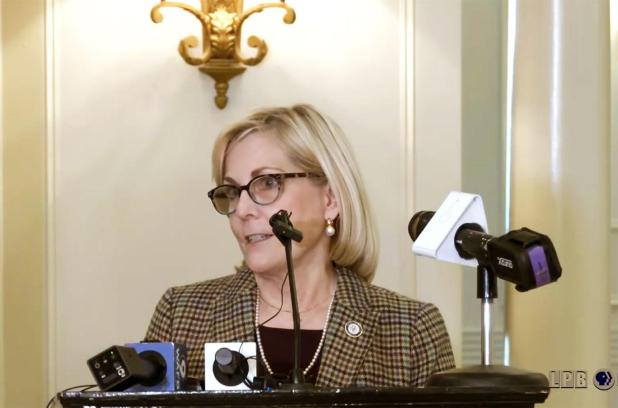
Secretary of State Nancy Landry said new voting machines will cost $100 million.

Secretary of state: La. needs more money for voting machines

BATON ROUGE—Secretary of State Nancy Landry said this week that $25 million more is needed to cover the $100 million cost of replacing Louisiana’s 35-year-old ballot machines The system would consist of new touchscreen voting machines that print paper ballots and have climate-controlled facilities for storage. Additional expenses would maintain cybersecurity protections and allow for risk-limiting audits, which are considered the top standard for voter integrity. “Louisiana voters have consistently indicated that they want a system that combines the speed of modern technology with the security of a voter-verifiable paper ballot, as required by state law,” Landry told the Senate Finance Committee Monday. The paper ballots will allow voters to verify their choices before casting.
Landry also told the committee that her agency’s investigators had identified 403 non-citizens who were registered to vote in Louisiana. Eight-three of them had voted in at least one election, she said.
President Donald Trump and other Republican leaders have claimed that large numbers of unauthorized immigrants are voting in American elections. The Louisiana Legislature passed a bill in 2024 requiring proof of citizenship in registering to vote.
But the 403 non-citizens, who have all been removed from voter rolls, amounted to a minuscule percentage of the 2.9 million registered voters in the state.
The new voting system will slowly phase out the older machines before completely taking over.
Six certified vendors are being considered for new machinery. No vendor has been selected, but the secretary of state’s hope is to have one before the end of the year.
She said manufacturers no longer make replacement parts for the current machines. Parts are often cannibalized from other machines.
“Simply put, the system has reached the end of its life cycle,” she said.
Even with old machines, Louisiana ranks fourth in the nation for voter integrity only behind Arkansas and Tennessee, which are tied for first, and Alabama, according to The Heritage Foundation, a conservative think tank in Washington, D.C.
“When I took office, I pledged to make Louisiana No. 1 in election integrity,” Nancy Landry said. “At that time, Louisiana was ranked ninth.”

Louisiana AG argues against Biden FDA abortion pill rules

A federal judge in Louisiana heard arguments on Tuesday challenging a mail-order abortion drug rule, finalized in 2023 by President Joe Biden’s Food and Drug Administration.
Louisiana Attorney General Liz Murrill and plaintiff Rosalie Markezich, filed a lawsuit against the FDA for removing the rule that ensured women receive an in-person office visit before taking abortion drugs, including mifepristone.
“If the Biden FDA had not removed in-person dispensing, my then-boyfriend would not have been able to obtain abortion drugs and pressure me to take them against my will,” Markezich told Alliance Defending Freedom.
According to Murrill, Markezich was one of many women whose boyfriends or family members ordered abortion drugs from out of state and coerced or tricked them into taking them.
“Out-of-state abortion drug peddlers are violating the criminal laws of Louisiana and other states across the country that choose life,” Murrill told the Alliance Defending Freedom. “They aren’t providing healthcare; they’re drug dealers.”
In January, the U.S. Department of Justice asked the district court to halt the lawsuit, saying that Louisiana’s case lacked standing since Markenzich was not actively suffering immediate harm. With 60 members of Congress and 21 attorneys general in support of Louisiana’s lawsuit, the court hearing proceeded in Lafayette, Louisiana, on Tuesday.
Those in support of the FDA rule cited the Supreme Court decision that overturned the right to abortion provided by Roe v. Wade. Danco Laboratories, which is a New York distributor of mifepristone, was in support of the FDA rule.
“Making it a federal crime to mail drugs for lawful medical purposes contravenes nearly a century of precedent and all indicia of Congressional intent,” Danco Laboratories wrote. “It would also significantly interfere with states’ traditional power to enact their own ‘health and welfare laws.’”
Murrill argued that the FDA rule caused a contradiction with Louisiana’s strict abortion restrictions, allowing abortion drugs to be trafficked into the state from California and New York, endangering women.
“This is not about the mifepristone pill itself; it's about the removal of in-person dispensing requirements that the Biden administration effectuated by rule during [the COVID-19 public health emergency],” Murrill said at a news conference. Tuesday. “The in-person dispensing requirement protects women, and it protects babies, and there's absolutely no reason why the FDA should have ever removed that requirement.”
Louisiana is not the only state challenging either the approval of mifepristone or subsequent actions easing the restrictions for mailing abortion pills. Missouri, Idaho, Kansas, Florida and Texas have challenged the ease of restrictions.
“They were seeking the same relief. And so it wasn't until that litigation started to run into obstacles in its ability to proceed that we decided we needed to go ahead and proceed,” Murrill said.
Trump's FDA has been hesitant to further restrictions on abortion drugs and other abortion-related measures, despite Murrill’s belief that they would reinstate the in-person dispensing requirement.
“Unfortunately they have not done it quickly, and I think that that should change,” Murrill said.
"We will continue to pursue enforcement of our laws, both civilly and criminally, against anybody who has facilitated the distribution of these drugs for the purposes of causing an abortion,” Murrill said. “It is a violation of our criminal laws, and we will pursue them and hold everyone accountable.”

Article Image Alt Text

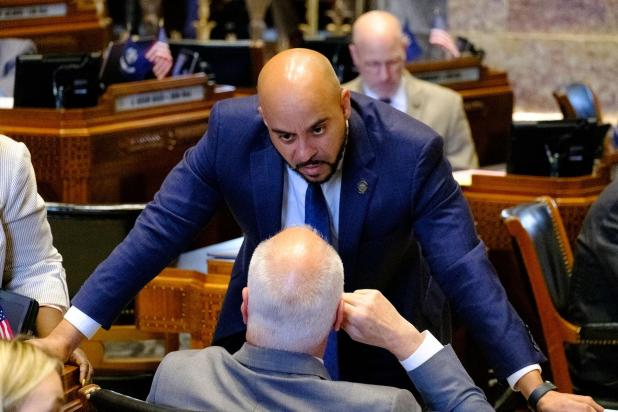
State Rep. Royce Duplesis, D-New Orleans, believes get-tough crime legislation may have to be scaled back to slow the growth in spending on state prisons.

LSU Manship School News Service/Cross Harris

Crime crackdown raises costs for La. prisons

BATON ROUGE – In 2016, Louisiana faced a $2 billion budget gap, and lawmakers decided they could no longer afford to lock so many people up.
But in 2024, after a nationwide crime spike during the COVID pandemic, Gov. Jeff Landry reversed many of the changes, pushing through laws to keep offenders in jail longer, sending more juveniles to adult prisons and limiting the possibility of parole.
Now costs are rising again, fueled by an increase in the state’s prison population and the price of housing offenders in local facilities.
Landry has proposed a new state budget and penciled in an $82 million increase to cover local offender housing, administrative costs to oversee parole and probation and prisons, and housing for immigrant detainees.
Louisiana’s juvenile justice system has asked for $28 million for the construction of a new juvenile detention center.
The proposed increases seem to be a significant issue when the Legislature convenes for its regular session from March 9 to June 1, with some Democrats and advocacy groups already expressing concerns.
“That’s a bad use of our dollars,” said state Sen. Royce Duplessis (D-New Orleans). “Think about if we put that into quality early childcare, quality early learning. You want to reduce crime? We could start by investing in babies at their youngest ages.”
Cree Matlock, the director of government affairs & policy at the Power Coalition, a nonprofit group focused on building civic engagement in minority communities, added: “To be quite honest with you, the greater community needs to understand that our current administration is prioritizing incarceration or putting individuals in prison instead of any type of preventative measures.”
Major budgetary initiatives include increasing cell space for state offenders at the Louisiana State Penitentiary and raising the per-diem paid to sheriffs to house some state offenders in parish jails.
For the fiscal year starting July 1, the per-diem paid to sheriffs would increase $3, from $26.39 to $29.29.
State Rep. John R. Illg, R-Harahan, said, smaller jails cannot afford to do it now. For $25 a day, you want to house and clothe and feed somebody. It’s very hard to do.”
He detailed the ongoing compromises made between the Louisiana Sheriff’s Association and local government for jail funding. Final per-diem increases often reflect inflation and are lower amounts than initially hoped for.
State spending for Angola would also increase by $17.5 million to expand capacity.
When state officials were dealing with the huge budget gap in 2016, Louisiana was widely seen as the nation’s incarceration capital, with more residents locked up as a percentage of the total population than any other state.
Democrats opposed locking up nonviolent offenders given the impacts on them and their families, and moderate Republicans viewed the prison costs as unsustainable.
After then-Gov. John Bel Edwards proposed a $92 million decrease in corrections funding, a bipartisan majority of the Legislature voted to reduce sentencing for those convicted of nonviolent offenses, treat juveniles in juvenile facilities rather than prisons and save prison space for violent offenders.
These changes contributed to a 24% decrease in prison population due to reductions in time spent incarcerated for nonviolent offenses. In 2023, the Department of Public Safety & Corrections reported there was a 15% reduction in the recidivism rate between 2016 and 2019.
The state also reinvested $107 million of the savings into rehabilitative programming and victims’ services.
Yet the pandemic fallout and spike in crime increased incarceration levels again and reinvigorated support for a tougher approach.
Shortly after he took office in 2024, Landry convened a special crime session. He said he wanted to end frustrations with “the leniency of sentencing and our misguided post-conviction programs that feed recidivism by constantly returning unreformed, unrepentant, and violent criminals to our neighborhoods.”
But as corrections costs rise again, Duplessis, the New Orleans Democrat, foresees several “clean-up” bills debated during the upcoming session.
“I think you’ll probably see some legislation to dial back the drastic 2024 laws that were passed,” Duplessis said. “I think that there were some unintended consequences.”
Now, there seems to be a renewed focus on reentry services and prison programming.
In a Jan. 14 meeting of the House Committee on Administration of Criminal Justice meeting, , Rep. Debbie Villio, R-Kenner, the panel chairman, addressed ongoing criticism of the 2024 legislation.
“If everybody looks back to the crime session, when I did all the ‘tough-on-crime’ bills, there was always a lot of chatter about ‘we’re just trying to ramp up prison populations,’” Villio said. “I said then and I will say now again that that was absolutely not the truth.”
Villio explained that by increasing prison time, those who are incarcerated can partake in meaningful prison programming.
In a Senate hearing Monday, the Corrections Department focused on rehabilitative services, including vocational and license training programs, for juveniles who are incarcerated.
Department data presented showed that in 2025, 536 juveniles were awaiting placement in juvenile detention centers.
Compared to 2019, the budget for local juvenile housing in 2027 would increase by 87% to $226.6 million.
“One of those things that does impact us budgetarily is the numbers of youth that come into the system, which is why you see some of those significant increases,” Jason Starnes, undersecretary at the Corrections Department, said.
He said the budget increases “are for the addition of these facilities, because we simply don’t have the capacity at the current time.”
In response, state Sen. Gerald Boudreaux, D-Lafayette, told Starnes, “We need to know what you need. We still have some more work to do, and we are in it with you.”

Article Image Alt Text

Michele D. Theriot

Article Image Alt Text

Kimberly Reynolds

Article Image Alt Text

Kaisa Young

Nicholls fills three administrator posts

Nicholls State University recently filled three vacant leadership positions – dean of the College of Liberal Arts, dean of the College of Education and Behavioral Sciences and assistant vice president for Academic Affairs.

“The depth of experience and dedication these three leaders bring to their new roles is a testament to the talent within our university community,” said Nicholls President Jay Clune, PhD. “I am confident that their leadership will continue to elevate our academic programs and strengthen our commitment to student success for years to come.”

Dr. Michele D. Theriot, an alumna of Nicholls State University and the University of Louisiana at Lafayette, was named the dean of the College of Liberal Arts. Her appointment follows a distinguished administrative tenure, including five years as assistant dean and over a decade as associate department head of English, Modern Languages and Cultural Studies. As interim dean, and now officially dean, she will continue to oversee seven academic departments and nearly 80 full-time faculty members while managing complex college budgets and accreditation efforts. Beyond her administrative duties, Theriot is an accomplished associate professor and a recipient of the Presidential Award for Excellence in Teaching, reflecting her deep commitment to student success.

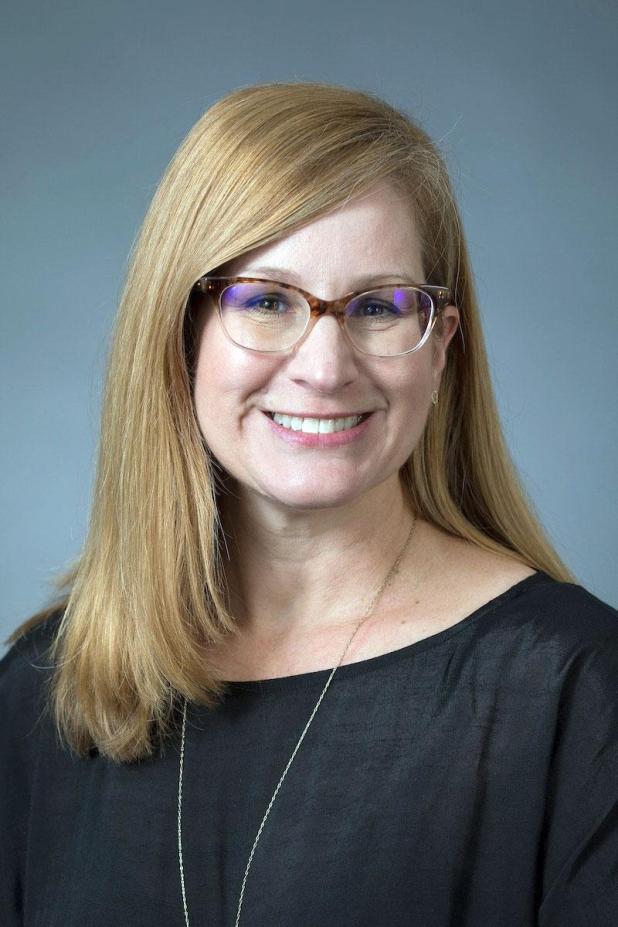
Dr. Kimberly Reynolds was named the dean of the College of Education and Behavioral Sciences, where she will continue to provide strategic leadership for academic programming and accreditation standards. A Nicholls alumna and former student-athlete, Reynolds holds a Ph.D. in general psychology and has served the university since 2006 in various capacities, including assistant professor and department chair of Psychology, Counseling and Family Studies. Her background as a Licensed Professional Counselor and Supervisor provided a foundation for her to maintain high standards of teaching and faculty development. Throughout her tenure, Dr. Reynolds has also been heavily involved in campus life, serving as the faculty athletics representative and contributing to mentorship programs that support student success.

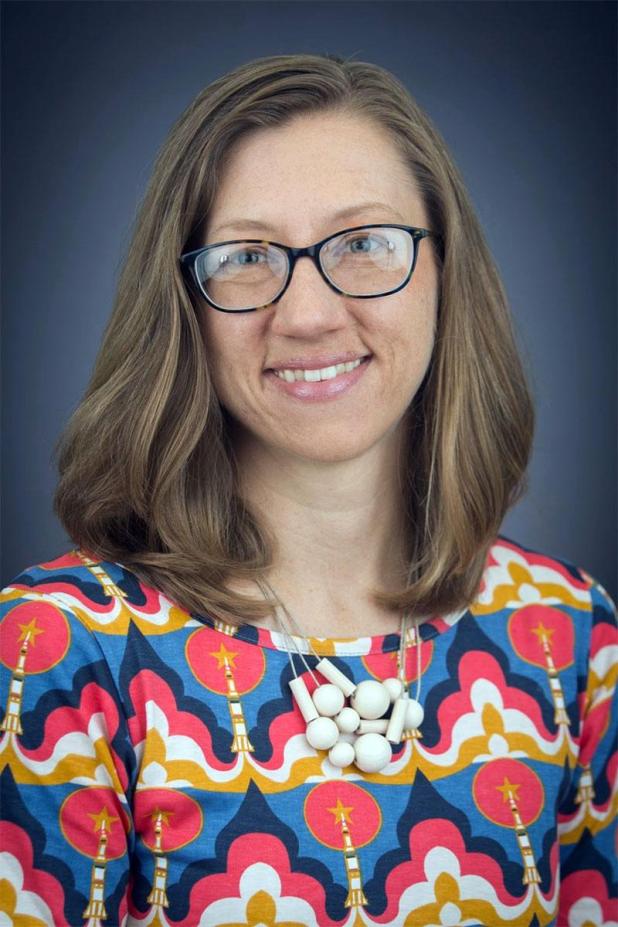
Dr. Kaisa Young was named the assistant vice president for Academic Affairs, bringing over two decades of expertise as a strategic planner and award-winning educator. With a Ph.D. in astronomy from the University of Texas at Austin, Young recently served as the department head of Chemistry and Physical Sciences and previously revitalized the university's general education curriculum as program coordinator. Throughout her research career, she has secured over $600,000 in grants and authored numerous publications on both star formation and STEM pedagogy. Dr. Young’s commitment to institutional excellence is further evidenced by her leadership roles on various committees and her recognition as the 2021 Woman of Achievement.

These appointments highlight Nicholls State University’s commitment to academic excellence, institutional growth and the expertise of its leaders. Together, these administrators will continue to foster a culture of student success and innovation across the university

Article Image Alt Text

Morgan City police radio logs for Feb. 23-24

The following are the radio dispatch logs from the Morgan City Police Department. To report unlawful or suspicious activity, call the Police Department at 985-380-4605.
Monday, Feb. 23
7:37 a.m. La. 70/David Drive; Complaint.
10:33 a.m. 700 block of Myrtle Street; Complaint.
12:02 p.m. 700 block of Myrtle Street; Arrest.
12:41 p.m. U.S. 90 West; Complaint.
12:47 p.m. 300 block of Chennault Street; Animal complaint.
1:26 p.m. 700 block of Duke Street; Arrest.
1:52 p.m. 400 block of Garber Street; Complaint.
1:56 p.m. 2300 block of Cypress Street; Complaint.
2:46 p.m. 1900 block of Cedar Street; Reckless operation.
3:05 p.m. Cedar Street; Patrol.
3:26 p.m. 1000 block of La. 70; Crash.
4:26 p.m. 100 block of Eleventh Street; Animal complaint.
5:06 p.m. 500 block of Hilda Street; Theft.
6:09 p.m. 800 block of Brashear Avenue; Stalled vehicle.
6:09 p.m. 3200 block of Vine Drive; Complaint.
7:03 p.m. 1100 block of Fourth Street; Subject removal.
7:08 p.m. 3300 block of Youngs Road; 911 hang up.
7:18 p.m. 1000 block of Marshall Street; Juvenile complaint.
7:21 p.m. 600 block of Martin Luther King Boulevard; Crash.
9:28 p.m. 7300 block of La. 182; Alarm.
11:47 p.m. 500 block of Garber Street; Juvenile complaint.
Tuesday, Feb. 24
2:32 a.m. 800 block of Youngs Road; Complaint.
4:56 a.m. 600 block of Martin Luther King Boulevard; Alarm.

Pages

ST. MARY NOW

Franklin Banner-Tribune
P.O. Box 566, Franklin, LA 70538
Phone: 337-828-3706
Fax: 337-828-2874

Morgan City Review
1014 Front Street, Morgan City, LA 70380
Phone: 985-384-8370
Fax: 985-384-4255