RSS Feed

Article Image Alt Text

St. Mary refunds beat La., U.S. averages

Has Uncle Sam been good to you this year?
An analysis by the Upgraded Points website says the average St. Mary Parish income tax refund this year is $4,186. In Assumption, it’s $3,876.
The St. Mary refund is higher than the state average, $4,117, and the national average of about $3,000.
Roughly three-quarters of all tax filers receive refunds.
In Louisiana, approximately 73.0% of returns result in a refund.
About 9% of taxpayers don’t use direct deposit, with paper check use highest in rural areas and in pockets of the northern U.S. In Louisiana, about 91.4% of refunds are issued via direct deposit.
Overall, average refunds increase with household income; however, high-income taxpayers are the least likely to receive refunds.
Generally, average refund amounts are highest in parts of the South and Mountain West, especially Florida, Texas, Wyoming and Nevada.
Refunds rising
Over the past 15 years, the average federal tax refund has generally ranged from $2,800 to $3,000, but the COVID-19 pandemic disrupted that pattern.
During the 2020 filing season, the average refund dropped to $2,549, reflecting widespread job losses and reduced earnings early in the crisis.
In the years that followed, refunds rebounded sharply. A combination of rising wages, expanded tax credits, and other stimulus measures pushed the average refund to a record $3,252 by 2022.
Yet as pandemic-era tax credits expired, fewer taxpayers received refunds. The proportion of returns resulting in a refund dropped from 77.1% in 2021 to just 62.8% by 2025.
However, preliminary data for the 2026 tax season currently shows a higher average refund of $3,571 and a 72.9% refund rate, though early filing trends typically skew these figures upward.
Varying by
income group
Tax refunds vary significantly by income level, with higher-income households receiving larger refunds on average — plus and a smaller share of these households receiving any refund at all. According to the latest IRS data, filers earning less than $50,000 received an average refund of $2,766 after adjusting for inflation, with over 77% of total returns in this group receiving refunds. Receiving a refund was nearly universal among the lowest-income group, with 99.3% of those eligible choosing to receive a refund rather than applying their overpayment to next year’s taxes.
For middle-income filers earning $50,000 to $100,000, the average refund rose to $3,211, though just 68.3% received one. Refunds increased further to $4,820 for those earning $100,000 to $200,000, but only 55.4% of these returns resulted in a refund.
At incomes above $200,000, the average refund surged to $17,668. However, just 35% of returns received a refund, and nearly one-third of filers with overpayments opted to apply their credit to the following year’s taxes instead.
How we file
Just as direct deposit has largely replaced paper checks, the way Americans submit their tax returns has undergone a dramatic transformation. In 2009, 66.1% of all tax returns were submitted using e-file. As consumer tax preparation software became more accessible and the IRS expanded its digital infrastructure, that share steadily climbed, surpassing 80% by 2012 and continuing a gradual upward trajectory throughout the decade.
Much like its impact on refund sizes, the COVID-19 pandemic served as a major catalyst for further digital adoption, pushing the share of e-filed returns past the 90% threshold for the first time during the 2020 filing season. Today, electronic filing is nearly universal. For the 2026 filing season, preliminary data indicates that an unprecedented 98.3% of tax returns will be submitted via e-file, aligning with the overwhelming preference for direct deposit to process returns quickly and securely.
The Upgraded Points analysis uses data from two primary sources provided by the Internal Revenue Service: the Filing Season Statistics and the Individual Income Tax Return (Form 1040) Statistics.
The Filing Season Statistics offer the most up-to-date information on federal tax refunds, including estimates through the 2026 filing season. However, these figures reflect data by filing season, not by tax year, and may differ slightly from specific tax year data.
For more detailed breakdowns (such as refund amounts by income level, state, and county), the most recent available data from the Form 1040 Statistics, which covers Tax Year 2022, was used. The average refund amount was calculated by dividing the total amount of overpayments refunded by the total number of returns that resulted in a refund, which is consistent with the IRS’s standard definition.
Dollar values were adjusted for inflation to better estimate tax refunds in 2026. It is important to note that this does not represent the average total overpayment since some taxpayers elect to have their overpayments credited to the next tax year rather than refunded. However, according to IRS data, approximately 97% of taxpayers choose to receive their overpayment as a refund, making this a reliable estimate of the refund experience for most filers.
While many Americans look forward to receiving a tax refund each year, it’s worth noting that a large refund isn’t necessarily a financial win. A sizable refund often means that too much was withheld from paychecks throughout the year — essentially providing the federal government with an interest-free loan.
For households aiming to optimize their finances, adjusting tax withholdings to better match actual tax liability can free up money for savings, investments, or everyday expenses throughout the year.
The IRS offers a Tax Withholding Estimator (https://www.irs.gov/individuals/tax-withholding-estimator) to help individuals fine-tune their withholding.

Article Image Alt Text

Dear Abby: Flirty drinking buddy crosses the line with smooch

DEAR ABBY: We were friends with a couple we met about five years ago. We went out together a few times and mostly saw them at our neighborhood bar. They live about 30 miles away.
Well, the husband passed away about a year ago, so we offered the wife a bedroom whenever she comes this way so she doesn’t have to drive in the dark.
The last time she stayed here, she made a pass at my live-in man. She’s a terrible flirt. She grabbed him and kissed him while I was in the spare room getting it ready for her.
We are no longer comfortable having her stay here and haven’t invited her since. It is so awkward. Am I being unreasonable? Good grief, we are in our 70s and shouldn’t have these teeny-bopper issues. I’m feeling guilty. Help!
MIXED FEELINGS IN THE MIDWEST

DEAR MIXED FEELINGS: Did you invite this woman to stay over because you were concerned about her driving alone at night, or because she had been drinking alcohol? If it’s the latter, it isn’t much of a stretch to imagine her impulse control could diminish to the point that she’d make a pass at your fella.
I don’t think you should ignore this without comment. If she asks you why she’s no longer invited to stay over at your place, tell her that when she grabbed and kissed your companion, she embarrassed him, and the two of you are no longer comfortable with the arrangement. It’s the truth.

DEAR ABBY: My son-in-law, “Ivan,” was raised in a troubled family. His father has many food phobias and drug issues. Ivan has never held a job and still lives with his parents. (My daughter lives there too.)
I see Ivan developing the same issues as his father. He often cancels visits because he thinks he’s sick. The last time, he said he was sick for six weeks. (I’m pretty sure he wasn’t.) Ivan is fearful of foods. His distrust of dishes I have prepared borders on insulting. He’s also a germophobe. If someone coughs anywhere near him, he becomes “sick” soon afterward.
Ivan also doesn’t like being outside because he’s afraid of bees and bugs. He is very controlling of conversations and activities. I don’t think it’s as much a control thing as it is fear. He’s always had mild issues with germs and food, but, lately, they seem to be becoming more extreme.
I can’t talk to my daughter about these things. If I say anything, even in the most careful and neutral way, she explodes at me. I just learned Ivan is on anxiety medication. I hope I’m overreacting, but I’m worried for my daughter’s safety. Are people with extreme anxiety and phobias dangerous to the people around them?
DIAGNOSING IN OHIO

DEAR DIAGNOSING: I have never heard that people with severe anxiety and phobias are dangerous to others. These kinds of problems are life-changing, and the sufferers often live very limited lives, as Ivan and his father (and now your daughter) are. I’m sure that her husband’s limitations affect your daughter greatly, but how she chooses to deal with this situation is her decision. Please do not increase her problems by adding your own worries to her burdens.

***

For an excellent guide to becoming a better conversationalist and a more sociable person, order “How to Be Popular.” Send your name and mailing address, plus check or money order for $8 to: Dear Abby, Popularity Booklet, P.O. Box 446, Kings Mills, OH 45034-0446.

Article Image Alt Text

Angela Bourg, a New Iberia physician saved by a heart transplant, releases butterflies to symbolize transformation Tuesday at Ochsner St. Mary.

Article Image Alt Text

Angela Bourg shows a picture of her and the mother of the young man whose heart donation saved Bourg's life.

Article Image Alt Text

Kevin Savoy, security supervisor at Ochsner St. Mary, and Lauren LeBlanc, the Louisiana Organ Procurement Agency's donation services coordinator, raise a LOPA flag to honor donors and recipients.

UPDATED WITH STORY: Honoring donors, celebrating recipients

Angela Bourg released butterflies Tuesday outside Ochsner St. Mary, a symbol of transformation and hope.
For Bourg, it was more than just a symbol.
“I am powered by the gift of life,” Bourg said.
Bourg, a family practice doctor in New Iberia, was among the organ recipients who gathered Tuesday for the Morgan City hospital’s annual celebration of recipients and donors.
“At the heart of organ donation are families who say yes in the midst of unimaginable loss and families who are given a second chance at life,” said Jennifer Cooley, RN, house supervisor and Louisiana Organ Procurement Agency coordinator at Ochsner St. Mary.
Bourg’s heart transplant came 6-1/2 years ago.
“I went from being the family doctor in New Iberia to being a patient at Ochsner New Orleans after a bumpy Highway 90 ambulance ride that I don’t remember …,” Bourg said.
She woke up in a hospital after a day and a half.
“Everyone was wide-eyed,” Bourg said. “I said, ‘Come on, I’ve got to get back to work.’”
But Bourg learned that her heart had failed. She was placed on the list for a heart donation. After three weeks, she was told to “call your kids. Get them here. It’s going to happen.”
She received the heart of a 21-year-old named Drake. Now Bourg and Drake’s mother work together as advocates for organ donation. The young man had told his mom that “he wanted to make a difference, wanted to leave a legacy.”
Drake’s mother calls Bourg his legacy.
Becky Bilello of Thibodaux had her own legacy story. About the time she was celebrating her 34th anniversary, Bilello learned that she would need a heart transplant.
After five days on the transplant list, she received the heart of a 19-year-old named Nicholas. That was 19 years ago.
“Thank you, Nicholas,” Bilello said. “I pray for you every day.”
Lou Tamporello of Morgan City has helped organize the annual ceremony honoring recipients and donors. Tamporello received liver and kidney transplants 14 years ago.
For the families of potential donors, “it’s a very tough situation to be in, and you have to make some rough decisions,” Tamporello said. “Somebody made that decision for me.”
Transformation has another place in the organ donation story.
The Louisiana Illuminator reported that in 2022, the Centers for Medicare & Medicaid Services instituted new standards regarding transplant donations. The Louisiana Organ Procurement Agency, which coordinates organ donations and transplants in the state, suddenly found itself near the bottom in the rankings of transplant programs.
LOPA regrouped, partly with technology that increased the time organs can remain viable, but also with training for hospital staffers in how to interact with the families of potential donors.
By 2024, LOPA had raised the number of successful transplants 22% to 883.

Article Image Alt Text

Obituary: Rosemarie Pecoraro Vining

April 10, 1936 – April 9, 2026
Morgan City, LA
Rosemarie Pecoraro Vining passed away peacefully at home, with family by her side, on Thursday, April 9, 2026, just one day shy of her 90th birthday.
Born on April 10, 1936, in Hammond, Louisiana, Rosemarie grew up on her family’s strawberry farm as the youngest of 4 children. The daughter of Sicilian-born parents, Rosemarie attended Hammond High School, Class of 1954, and Southeastern Louisiana University, where she was a proud member of Southeastern’s Lionettes Dance Team. After graduating from SLU in 1958, Rosemarie moved to Morgan City, where she began her teaching career at Berwick Elementary. She had a gift for making her students feel seen while keeping them in line. Over more than 30 years at Berwick Elementary, Margaret Squires, Shannon, and M.E. Norman, Rosemarie educated countless young minds, inspiring generations of learners with her passion, wit, and unwavering standards.
“Re,” as she was endearingly referred to by her grandchildren, was the epitome of a southern lady — strong, spirited, and full of sass. She exuded confidence, flair, and style like no other. Her iconic, signature sashay announced her arrival with unmistakable presence. Impeccably put together and “dressed to the nines,” Re always stepped out with matching purse, shoes, and jewelry, no matter the occasion.
In 1958, her spitfire personality and spunky charm captured the heart of Alden Vining, Jr., and the two became an inseparable pair. Their 65-year marriage was a testament to enduring love, loyalty, and lifelong commitment. Alden took great pleasure in doting on Re, and Re delighted in every well-earned moment, accepting it as nothing less than deserved. In the years following Alden’s stroke, Rosemarie remained a constant source of strength and support, caring for him unconditionally. Their deep respect for one another grew even stronger over time.
After a decade of marriage, Rosemarie welcomed two children whom she cherished and adored. From a very young age, both Valerie and Michael learned the importance of proper etiquette and how to behave in public- or, as Re made clear, how not to. As they grew, she remained their biggest fan and cheerleader- always involved, endlessly supportive, and never short on wisdom or advice.
There was no season Rosemarie loved more than Mardi Gras. A charter member of the Krewe of Galatea, she remained an active and devoted member for over 55 years and proudly reigned as Queen Galatea XXX, a role she was meant to embody. Rosemarie was a queen in every sense of the word- a social butterfly, as sparkly and fancy as she was outspoken. Whether over coffee, tea, wine, or champagne, she was always ready for a good party or a visit with friends of any age. She relished her weekly visits to Christopher’s- a standing beauty parlor appointment she never missed- where her quick wit and playful banter with her dear friend, Chris, were always on full display. Her unapologetic spirit and unforgettable one-liners truly made her one of a kind.
A devout Catholic, Rosemarie was a faithful member of Holy Cross Catholic Church, where she served for many years as both a lector and Eucharistic minister. She also gave generously of her time as a “Pink Lady” volunteer at Lakewood Hospital. In her retired years, she and Alden enjoyed traveling the world side by side. When she wasn’t away on an adventure, she devoted her time and talents to her gifts as a seamstress and craftsperson, lovingly handcrafting and embroidering a beautiful collection of exquisite Christmas stockings for her family to treasure.
Above all, Rosemarie was a loving, caring, and larger-than-life wife, mother, mother-in-law, grandmother, and great-grandmother. Her greatest happiness came from time spent with those she loved. Her home was not just filled with rules to follow- it was filled with warmth, love, personality, charm, good food, good wine, and cherished treasures that perfectly reflected the special person she was. Though she has taken her final bow, her spirit, style, and legacy will reign on forever.
Rosemarie was preceded in death by her parents, Ottavio Pecoraro and Maria Pitarro Pecoraro; her husband, Alden Vining, Jr.; and her siblings Tony Pecoraro, Lena P. Nuccio, and Pat Pecoraro.
She is survived by her children, Valerie Webster (Darrell) of Berwick, LA, and Michael Vining (Diana) of Houston, TX; five grandchildren: Sophie Webster, Audrey Webster, Cameron Webster, Vivienne Vining, and Oliver Vining; and one great-grandchild, Maryam Webster.
Pallbearers will be Dale Pecoraro, Mark Pecoraro, Joseph Bursavich, Darrell Webster, Oliver Vining, Paul Vella, Todd Kirkpatrick, and Bobby Bostic. Honorary Pallbearers will be Kerry Nuccio, Charlie Solar, Sr., Chris Rhodes, David Kirkpatrick, Dr. Frank Distefano, Dr. Chip Metz, Lloyd Aucoin, Frederick Fondren, J.D. Theriot, Steve Orlando, and Robert Duhon, Sr.
The family would like to extend their heartfelt gratitude and appreciation to her amazing caregivers- Mouna, Cindi, Evelyn, and Gail for their compassionate care and support during her final days, with an extra special thank you to Mouna for her love and devotion to Alden and Rosemarie over the past 10+ years. And to Paul Vella, friend and neighbor, for his continual love and support.
Visitation will be held at Holy Cross Catholic Church on Friday, April 17, 2026, from 9:00 am until the Mass of Christian Burial at 11:00 am, celebrated by Father Jay Baker. Following Mass, Rosemarie will be laid to rest at Morgan City Cemetery.
In lieu of flowers, donations can be made in Rosemarie’s name to Holy Cross Church.

Article Image Alt Text

Obituary: Judy Ann Landry Tholen

It is with deep sorrow that we announce the passing of Judy Ann Landry Tholen. She passed away peacefully, surrounded by her family on April 11, 2026 at Ochsner St. Mary. She was born in Morgan City, Louisiana in 1949 to Paul Landry and Beatrice McAdams. After marrying her high school sweetheart, Dale M. Tholen, in 1967, they moved to Berwick, Louisiana where she lived the remainder of her life. Married for 58 years, they had 3 children and lived a full life.
Judy enjoyed so many things and was a joy to all who knew her. She and Dale traveled many places by plane, train, and automobile … and cruise ship! Some of her favorite memories were from her trips to Europe to visit her children serving in the military. She also enjoyed cooking for friends and family. She found joy in feeding those she loved. Her family will forever keep her memory alive with treasured recipes she taught them over the years. Judy was an avid shopper and a terrific gift-giver. She put thought into every birthday and Christmas and loved to see the reaction of the one who was receiving. Very “girlie” by nature, her favorite shopping trips included looking for clothes, jewelry, perfume, and skin care products for herself or for her daughters and granddaughters.
In the last few years, Judy enjoyed having monthly lunches with a group of tri-city graduates sampling the restaurants in the area. She really enjoyed spending time with others. She and Dale also often opened their home on Sundays after church for coffee. Her door was always open to family, friends, and soon-to-be friends.
Judy’s first love, even before Dale, was Jesus Christ. She was a faithful Christian who as a member of St. Stephen Catholic Church was active in many roles over the years, serving as lector, choir member, in the healing ministry, and as a member of Come Lord Jesus! She always began her morning with prayer and Bible study and was always willing to tell you how God had blessed her. Her family will forever remember her praying for the protection of the angels around them for every trip they took.
Judy was preceded in death by her father, Paul Junius Landry, her mother, Beatrice McAdams Talbot, and her brother, Keith Landry. She will be sadly missed and lovingly remembered by her husband of 58 years, Dale M. Tholen, her children, Kim Marra and her husband, Richard, Paul T. Tholen and his wife, Michelle, and Lacey Morgan and her husband Andrew. Her grandchildren, Ashlyn Sigler and her husband, James, Ryan Marra and his wife, Jacqueline, Carley Mounier and her husband, Phillip, Kierstin Tholen, Mariah Morgan and her companion, Isaac, Macey Morgan, and Max Morgan will remember the many fun times they had with their grandma. She will also be missed by our youngest generation, her great-grandchildren, who she loved more than they will ever know, Monroe, Penelope, and Eleanor Sigler, and Remy Mounier. She is also survived by her sister, Doreen Bertrand, her sisters-in-law, and her nieces and nephews who will miss her greatly.
The family would like to thank all her caregivers and doctors and most especially her sitter, Lisa Scully, who took excellent care of her and treated her like her own mom. They were like Thelma and Louise, having as much fun as possible during the last months of Judy’s life.
Visitation will be held Thursday, April 16, 2026 at 8:00 a.m. at St. Stephen church hall in Berwick, Louisiana followed by a Mass of Christian Burial at St. Stephen Catholic Church at 10:30 a.m. Father Salvadore Istre will officiate with Father Thainese Alphonse concelebrating. Interment will follow at Berwick Cemetery Mausoleum.
In lieu of flowers, the family requests donations be made in Judy’s memory to St. Stephen Catholic Church, 3217 2nd St., Berwick, LA 70342, https://ststephenberwick.org/give-1.
We invite you to share with the Tholen family your treasured memories and photos on her memorial page at www.iberts.com, celebrating a life beautifully lived.
Services have been entrusted to the care of Ibert’s Mortuary, Inc., 1111 Lia St., Patterson, LA, 70392, (985) 395-7873.

Article Image Alt Text

This National Weather Service photo shows Hurricane Francine approach the coast near Morgan City in 2024.

Hurricane forecast: below average season

The first prediction for the 2026 hurricane season foresees slightly below normal activity as a storm-favoring La Niña weather pattern gives way to an El Niño regime.
This year’s predictions follow a 2025 forecast for an above-average number of storms, followed by the calmest Gulf Coast hurricane season in decades.
The widely watched Colorado State University forecast for 2026 anticipates:
•13 named storms, (compared to an average of 14.4).
•55 days with named storms (69.4 on average).
•Six hurricanes (7.2 average).
•20 hurricane days (27 average).
•Two major hurricanes of at least Category 3 strength (3.2 average).
•Five major hurricane days (7.4 average).
“We anticipate that the 2026 Atlantic basin hurricane season will have somewhat below normal activity,” says the Colorado State report. “Current weak La Niña conditions are likely to transition to El Niño in the next few months, with the potential for a moderate/strong El Niño for the peak of hurricane season.”
AccuWeather described those weather patterns this way:
“El Niño occurs when ocean temperatures near the equator of the eastern Pacific Ocean warm to at least 0.5 of a degree Celsius (0.9 of a degree Fahrenheit) above the long-term averages. The warmer the water in this area of the Pacific, the greater the effect it will have on tropical activity worldwide.
“Typically, El Niño creates stronger upper-level winds (wind shear) across the Atlantic, making it harder for tropical storms to take shape. With El Niño forecast to develop and strengthen throughout the summer and autumn, it is likely to translate to fewer storms during the second half of the hurricane season compared to the first half.”
Even with the prospect of less than the average number of storms, preparedness is important, cautions AccuWeather’s Alex DiSilva.
“It’s very important that everybody from South Texas all the way to Maine prepares equally for each and every hurricane season, regardless of what the official forecast is.
“Even if it’s expected to be a slightly below average hurricane season, we can still see major hits across the United States.”
The Atlantic hurricane season officially begins on Monday, June 1.

Article Image Alt Text

Submitted photo
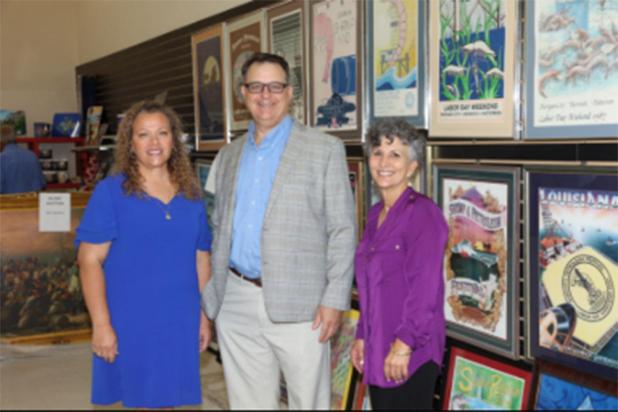
Appearing at Friday's grand opening were, from left: Sarah Solet, vice president of business banking at Hancock Whitney; Steven Matkovich, Federal Home Loan Bank Dallas Affordable Housing Program General Fund manager; and Stacey Lancaster, director and founder of The Purple Lemon.

Grant helps Purple Lemon create transitional housing

There’s a larger transitional housing apartment complex available to residents of South Louisiana, made possible in part by a $1.17 million Affordable Housing Program grant from the Federal Home Loan Bank of Dallas and Hancock Whitney.
The banks on Friday joined The Purple Lemon, a faith-based mission, to celebrate the grand opening of an expanded transitional housing development that assists people recovering from addictions and homelessness.
The grant, which was awarded by FHLB Dallas through Hancock Whitney, enabled The Purple Lemon to buy and expand an apartment building to 26 units of transitional housing. The upgraded community provides comprehensive supportive services — including counseling, job training, lifeskills education, support groups to help residents experiencing homelessness to achieve longterm stability.
“The AHP grant is helping us change the trajectory for people working to rebuild their lives,” said Stacey Lancaster, founder and director of The Purple Lemon. “With this support, we were able to expand our housing and will be able to provide a safe environment for more residents during their recovery journey.”
AHP grants are awarded annually through FHLB Dallas member institutions to support the development and rehabilitation of affordable housing for low-income households.
“We are honored to support The Purple Lemon in expanding housing for individuals working toward longterm recovery and independence,” said LaCarsha Babers, vice president and community outreach officer at Hancock Whitney. “We are proud of our relationship with FHLB Dallas that helped bring this project to life.”
 The organization began in 2019 by providing food and outreach to people experiencing homelessness and a year later began housing individuals in a leased apartment and providing supportive services.
“The Purple Lemon’s commitment to supportive, recoveryfocused housing reflects the impact the Affordable Housing Program is meant to create,” said Greg Hettrick, senior vice president and director of Community Investment at FHLB Dallas.

Article Image Alt Text

Jacob Bell

Children's program hit by budget cuts

FRANKLIN — The impact of parish government budget cuts came up again at the April 8 Parish Council meeting, this time involving a program for children.
To cope with a looming budget shortfall — Parish President Sam Jones put the amount at $400,000 — the parish instituted a series of cuts, including a 25% reduction in funds for nongovernmental agencies.
For the Save Our Children Mentoring Program in Franklin, that cut took a big chunk out of the $10,000 it has received from the parish.
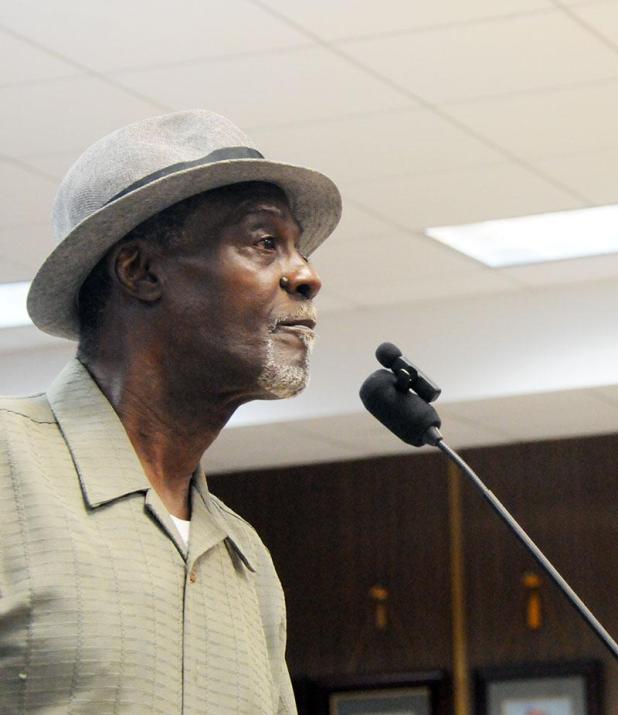
“But nobody seems to care,” said Jacob Bell of Save Our Children, who spoke to the council April 8.
Bell pointed to the recent Futures Project program, a joint effort by the Sheriff’s Office and the School Board to educate fifth-graders about bullying, substance abuse and other topics.
Bell said he learned that the Futures Project is supported by funds from an opioid lawsuit settlement involving millions of dollars. Yet he’s making do with less.
“I applaud what you do …,” Jones said. “The work you’ve done in the past has been excellent.”
That work has included monthly birthday parties, talks on topics such as bullying and nutrition, and Christmas gifts for participating kids in Franklin, mostly under 13.
But Jones said that while the parish’s financial picture is improving, cuts had to be made.
Councilman the Rev. Craig Mathews offered help in finding a grant writer for Save Our Children.
Also April 8, the council introduced two ordinances setting property tax rates for 2026. Both re-enact taxes that are already in place and would require no tax increase.
One ordinance keeps a millage of 5.72 mills for the parish library system. The tax is imposed across the parish except for Morgan City, which has its own library. Another 0.46 mills is dedicated to library debt repayment.
The second ordinance would keep the parish criminal justice property tax at 7.60 mills for unincorporated areas of the parish and 3.80 mills in municipalities.
A mill is 1/10th cent of tax levied on every dollar of assessed valuation. Louisiana’s homestead exemption, which protects the first $7,500 of assessed valuation from being taxed, applies to the library and criminal justice taxes.
Twenty days must elapse between the introduction of an ordinance and a final vote. The ordinances could come up for public hearing and a passage vote as early as May 13.

Article Image Alt Text

MidAtlantic Men will perform U.K., U.S. hits in Morgan City

The MidAtlantic Men will perform iconic hits by pop superstars at 7 p.m. Thursday at Morgan City Municipal Auditorium. The performance is part of the 2025-26 Community Concert Association series.
Tickets are $25 for adults and $5 for students K-12. Tickets are available at https://morgancitylive.com/tickets/
The MidAtlantic Men are two Americans and one “witty Brit,” according to promotional material.
“They’ve set out on a musical quest to settle the timeless debate: Which side of the pond, Great Britain or the United States, truly has the superior tunes?”
Their act includes hits by Elvis, Madonna and Billy Joel, as well as the Beatles, Queen, Elton John and more in a family-friendly format.

Republicans once more reject state minimum wage

BATON ROUGE--The House Labor Committee voted 7-5 along party lines to kill a bill that would have established a state minimum wage starting at $12 an hour on Jan. 1, 2027.
Republicans voted against the bill, and Democrats supported it. The party split was similar to votes in most years since former Gov. John Bel Edwards, a Democrat, began trying to set a wage above the federal minimum of $7.25 an hour.
Louisiana is one of five states in the U.S. that does not have a state minimum wage. Instead, employers use the federal minimum of $7.25 an hour that was set in 2009.
The bill, House Bill 353, by Rep. Tammy Phelps, D-Shreveport, would have further raised the minimum wage to $15 an hour in 2029 and included cost of living increases starting in 2031.
Supporters of the bill voiced concerns about the effect of low wages on residents’ ability to deal with increased prices for necessities, like groceries and gas, and on economic development. Some said Louisiana has lost talent to neighboring states that offer higher wages. Arkansas raised its minimum wage to $11 in 2021.
Advocates also argue that keeping wages low forces workers to rely on public assistance, effectively shifting costs onto taxpayers.
“By keeping wages low, we keep residents on social benefits,” said Melissa Flournoy, the chairwoman of 10,000 Women Louisiana, a civic advocacy group.
Testimony in favor of the bill came from a range of people, with strong support from members of the NAACP. A young activist, Caitlin Peoples, took the witness stand and said, “I may be 10 years old, but I know that work should be a chance to live, not just survive.”
Opponents argued that setting a higher minimum wage could cause a ripple effect that would harm business and employment.
Rep. Roger Wilder III, R-Denham Springs, said a higher minimum wage could lead to higher prices for consumers, reduced hiring and increased automation of entry level jobs.
Wilder pointed to examples like California, where, he said, 18,000 jobs were lost following wage hikes and a rise in automation replacing entry-level jobs.
Leah Long, the Louisiana and Mississippi director of the National Federation of Independent Business stated, “Minimum wage is not supposed to be a living wage. If anything, it is an inspiration for someone to improve to earn a higher wage.”
Rep. Brian Glorioso, R-Slidell, argued that improving workforce training and education is a more effective solution to poverty.
At its core, the debate at the hearing reflected a larger question: Should the minimum wage be a living wage or a starting point that incentivizes upward mobility?
Supporters argued that Louisiana workers deserve wages that lift them out of poverty and reduce reliance on government assistance.
Opponents contended that artificially raising wages could increase consumer prices and hurt small businesses.
Some polling indicates that four out of every five Louisiana residents support a higher minimum wage.

Pages

ST. MARY NOW

Franklin Banner-Tribune
P.O. Box 566, Franklin, LA 70538
Phone: 337-828-3706
Fax: 337-828-2874

Morgan City Review
1014 Front Street, Morgan City, LA 70380
Phone: 985-384-8370
Fax: 985-384-4255