
The Review/John K. Flores
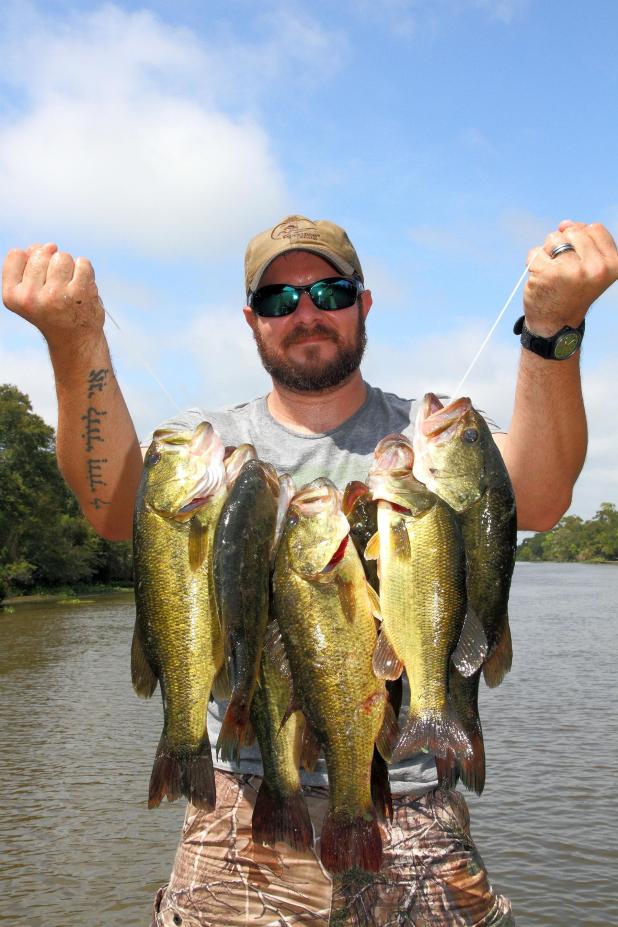
Jason Flores shows a stringer of bass caught during an August summer morning in the marsh.
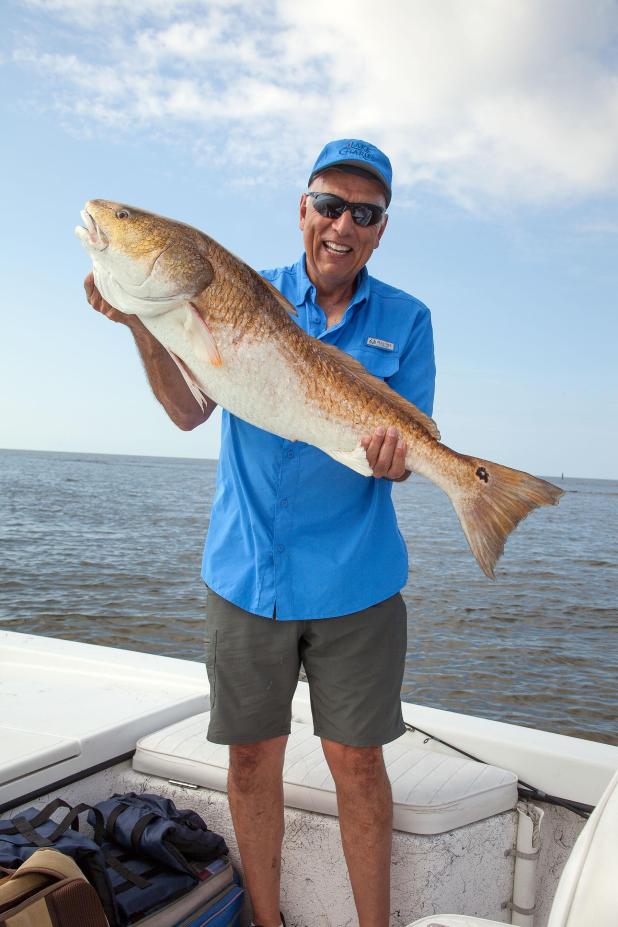
The author holds an East Cote Blanch Bay redfish.
John K. Flores: Beat the heat; fish early and late
By JOHN K. FLORES
It’s been hotter than a power outage at a wax museum lately, but fishermen still go fishing in August. One of the keys to catching fish during the dog days of summer is knowing when your target species is most active. Most of the time that’s during the early hours of the morning and late in the afternoon.
Once the sun gets overhead, it can be unbearable. Essentially, fish are a lot like people in that regard. We both tend to seek cooler surroundings as the day wears on and that’s where anglers adapt.
Take the local afternoon hog fights. It never ceases to amaze me how bass fishermen hustle home after work in the afternoon, hook up to their boats, and head out to the marsh and bayous. Over the years I’ve seen a lot of Facebook posts where bass club anglers have displayed impressive evening catches of largemouths.
By contrast, it’s the same in the early morning. In the twilight, 30-minutes or so before sunrise, when there’s hardly a breath of air and the water is slick calm, all you hear is the plop of your top water frog or the sound of a buzz bait skimming the surface.
Those moments can be the most peaceful you’ve ever experienced, until that moment when the water explodes beneath your bait. Instinctively the hook is set. You’ve done it a 100+ times, but it never gets old.
Once the fish is in the boat, the quiet returns. The humidity and brief exertion produce a small drip of sweat along your eyebrow. With your rod in one hand and the fish in the other, there’s no using your hand to wipe it off. Instead, you raise your shoulder, tilt your head, and use your shirt sleeve. In that moment life is good.
By 8-8:30 a.m. it’s over and time to head in. The hungry bass that moments before were chasing shad and other bait fish are now full and lethargic, looking for shade in the water’s depths.
It’s the same with redfish in the coastal brackish waters. I’ve pulled up to the mouth of canals and bayous, where in the shallows left and right I’ve seen the distinctive tails of reds churning the calm water feeding as the sun is about to rise.
On these occasions, it seems like I always slam the throttle of my boat back and scramble to put a shrimp on my jig head. The popping cork makes a big splash, and I let it rest for a few seconds while the doppler rings drift away from it.
Right then I pop the cork to mimic a shrimp trying to get away from a predator. The brief popping gets the reds attention and in a split second it tries to destroy the bait. The fish is brash and feisty. Its great runs zing line from the reel. My wrist hurts from the way it struck the bait, but in the subsequent moments it gives up and is measured for legality.
Redfish also seek cooler water temperatures as the morning wears on. Reds will go from shallow to deep and regularly continue feeding. Wherever you find a shallow flat in the 1-1/2- to 2-foot range that slopes to an underwater ledge and drops to the 20- to 28-foot range, it’s always smart to fish a location like this where the fish are running.
Old Oyster Bayou on Point Au Fer Island, Worm Bayou on Marsh Island, and Blue Hammock Bayou near Old Oyster Bayou are all deeper waters where redfish run during the hot summer months of July and August. The Humble Canal can be good during the late summer months in East Cote Blanche Bay, when the water isn’t stirred up from showers and fronts that pass through.
By taking a piece of cracked crab and placing it on a 4/0 Khale hook fixed to a drop rig is perfect for these situations. A pyramid sinker should be matched with the current. Start out with a 1-oz. weight and work your way up, if necessary.
Quite often, under these conditions, I’ve fished reds and left them biting. By mid-morning, it’s usually pretty hot and time to go home.
Whatever you do, don’t rule out the hottest days of summer to chase a few fish. All you have to do is choose the right time of day.
John Flores is the Morgan City Review’s outdoor writer. He can be contacted at gowiththeflo@cox.net.